

H2 budget planning season is here. For Malaysian operators thinking through July through December 2026, this is the most consequential allocation window of the year: Q3 sets up Q4, and Q4 is where the year-end conversion spike either pays off the annual marketing budget or leaves a gap to explain.
This post is a practical framework for thinking through that allocation across SEO, SEM, and GEO based on what we have seen across ADE Marketing engagements in the run-up to year-end.
Why H2 is different from H1
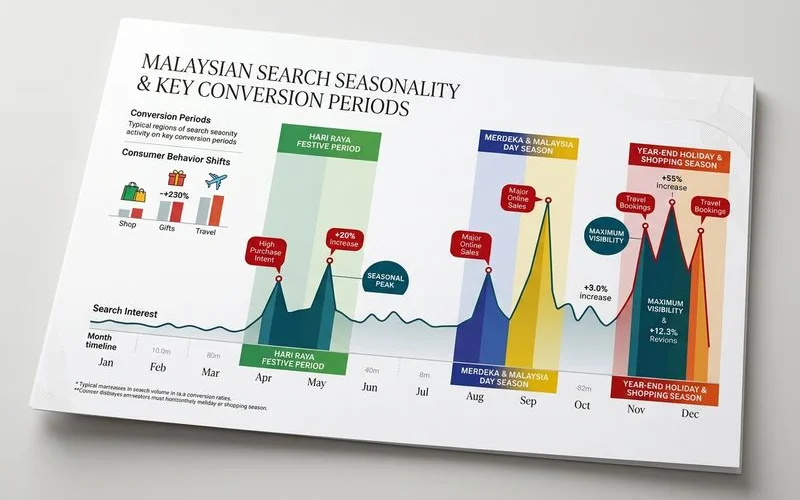
Three things change in the Malaysian search market between July and December:
- B2C demand spikes through Q4 (year-end gifting, holiday travel, deferred personal spend).
- B2B procurement cycles kick into “use it or lose it” mode in October–November as departments race to close annual budgets.
- Schema and AI Overview rollouts from Google historically land mid-year and reshape SERP real estate.
Plan your budget against that shape, not against a flat 1/12th monthly average.
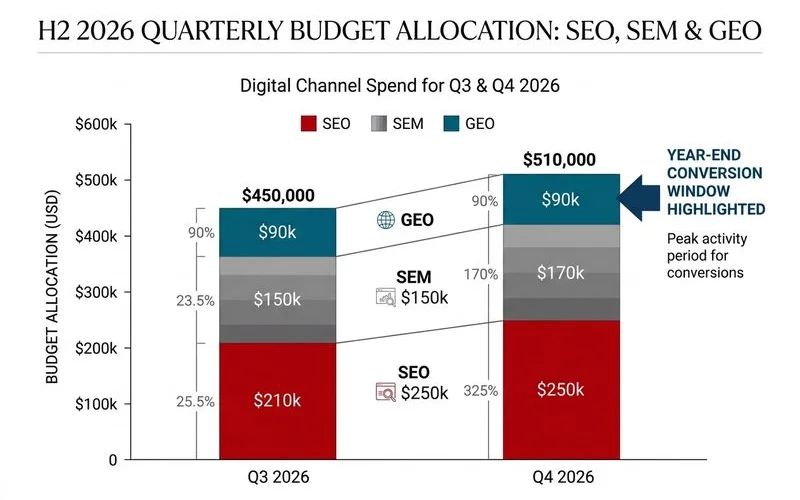
A practical allocation framework
Most Malaysian SMEs with a credible search marketing budget, call it RM10K–RM30K/month all-in, will land somewhere inside the following splits.
| Channel | If you are an early-stage SME | If you are a mature B2B | If you are an e-commerce operator |
|---|---|---|---|
| SEO | 30% | 40–50% | 30% |
| SEM, Google Ads | 60% | 30–40% | 50% |
| GEO (via ADE GenCite) | 10% | 10–20% | 10–15% |
| Tooling / measurement | absorbed | 5% | 5% |
The early-stage SME tilts paid because they need leads fast. The mature B2B tilts organic because they have compounding equity to defend. The e-commerce operator splits closer to evenly with a Q4 paid-search push.
The 90-day rule for H2 reallocations
Whatever split you set in July, plan one structured reallocation review in mid-September. By then you have 60–75 days of signal, enough to shift 10–20% of the budget toward the channel pulling its weight.
Specific H2 plays worth budgeting for
A few tactical line items most Malaysian operators under-budget for in H2 planning:
- GA4 audit + offline conversion import: before Q4 traffic ramps. If your conversion tracking has any holes, Q4 is exactly when they cost the most.
- Technical SEO refresh: Core Web Vitals tend to drift after a year of feature shipping. Budget a one-off audit early in H2.
- GEO baseline: even at 10% of total budget, a GenCite Framework baseline audit gives you measurement for AI visibility. By the time it matters, you will have data.
- PMax + Search separation discipline: if you are running Google Ads, the Performance Max vs Search decision should be revisited every H2.
What we will not budget for
For balance, three line items we usually argue against in H2 budgets:
- Bulk link-building campaigns. Earned authority beats bought authority every year. The shortcuts cost more in cleanup than they ever return.
- Switching agencies in November. If something is broken, fix it now in July. Mid-Q4 transitions burn the year-end window.
- Generic AI content at scale. AI without entity discipline and SERP analysis produces ranking noise, not durable traffic. Agility Writer exists because we know the difference.
How ADE Marketing structures H2 retainers
For our retainer clients, H2 planning is a structured exercise in late June: a budget conversation, a 90-day forecast, and a documented allocation across SEO, SEM, and GEO. We then revisit it at the September checkpoint.
Want this kind of planning on your H2 search budget? Talk to ADE Marketing. We will look at your current channel mix, your Q3/Q4 historical patterns, and propose a structured allocation tied to measurable outcomes.