
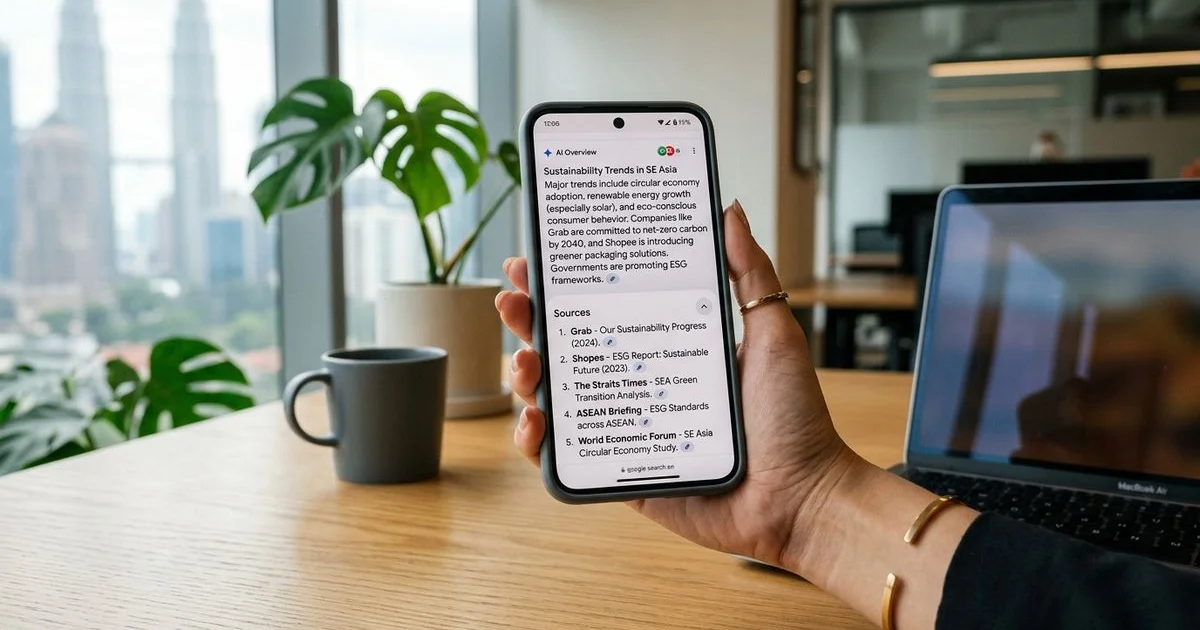
The direct answer
You know how the “SEO is dead” conversation seems to surface every time Google updates its interface? The reality on the ground for Malaysian business owners is much more nuanced right now. So, is seo dead 2026 style?
We see it differently.
Roughly six in ten searches now end without a click, according to multiple independent clickstream studies. SEO is still effective, but it has evolved into a foundational layer for the entire search ecosystem. This shift includes Google blue links, the local map pack, AI Overviews, and the broader AI search surface like ChatGPT and Perplexity.
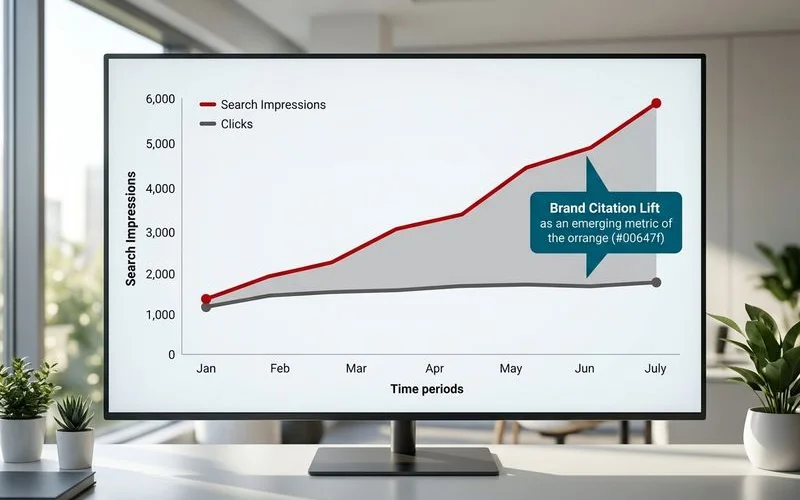
Click-through rates on the top organic positions have dropped because AI Overviews and zero-click features handle queries directly on the page. You will see impressions rising while clicks stay flat. The value of being the brand the AI cites has gone up significantly.
Our team focuses entirely on this new reality. ADE Marketing’s SEO programmes are built around an approach that simultaneously feeds classical rankings and AI citation visibility. Let’s look at the data behind this shift and explore practical ways to respond.
What AI Overviews and zero-click actually change
This shift is fundamentally altering how homeowners and business owners find local services. Two structural changes dictate how you should measure success today.
1. Click economics have changed
For many commercial queries, the AI Overview answers the question on the search engine results page itself. The click simply never happens. Brands that relied heavily on those clicks for website traffic are seeing impressions hold steady while actual visits dip.
Recent metrics from Semrush in early 2026 show that roughly 64.8% of global Google searches now end without a click. Mobile users experience this even more frequently. Industry data reveals a massive 77.2% zero-click rate on mobile devices compared to desktop searches.
A local homeowner searching for “roof repair costs Malaysia” gets an instant AI summary with pricing data immediately. They do not need to click a blue link. This ai overviews seo impact requires a complete adjustment of expectations.
2. Citation economics now exist
In exchange for those lost clicks, AI Overviews cite source brands prominently at the top of the page. Platforms like Perplexity AI are seeing rapid enterprise adoption for research because of this exact citation-first approach. Being cited is the new version of ranking “above the fold” for modern visibility.
This real estate is visible to the user even when no click follows. Our data indicates that citation value can easily exceed traditional click value. A user who reads your brand name in an AI summary is already pre-sold on your expertise before they ever pick up the phone.
The success metric for a zero click search seo strategy is no longer purely about clicks generated. It is now measured by clicks plus citations plus presence in AI answers. The foundational work to earn each of those metrics is largely the same.
Why on-page authority still feeds AI citations
Generative AI engines do not simply invent citations out of nowhere. They pull from the brands they trust most within their training data. Trust remains largely a function of the exact same signals classical SEO has always rewarded.
The Malaysian government recognizes this digital shift, with the Malaysia Digital Economy Corporation (MDEC) successfully onboarding 140 AI solution providers that generated RM1 billion in revenue recently. Local search is moving rapidly into these AI ecosystems. We consistently see that websites with strong technical foundations get cited far more frequently.
An April 2026 industry analysis revealed that sites with properly implemented structured data schema were cited in AI responses 3.2 times more often than those without. This shared substrate includes several critical elements:
- Domain authority and comprehensive topical depth
- Clean Schema and structured data for exact context
- E-E-A-T signals (Experience, Expertise, Authoritativeness, Trustworthiness)
- Entity coverage in the Knowledge Graph
- Citation networks showing who else mentions you on authoritative sources
Sites that ignored these classical SEO foundations are systematically ignored by AI engines today. Generative Engine Optimization is built directly on top of SEO, not instead of it.
SEO and GEO as complementary, not replacement
The framing we use with clients makes this relationship clear. You need a unified approach to capture traffic across all modern platforms.
| Surface | Channel | Primary measurement |
|---|---|---|
| Google blue links | SEO | Clicks, conversions |
| Map pack | Local SEO | Phone calls, directions, GBP visits |
| AI Overviews | SEO + GEO | Citation count, presence rate |
| ChatGPT / Gemini / Perplexity / Claude | GEO | AI citation rate (via BrandPeek) |
These are different surfaces requiring different measurement, but they share a common underlying substrate. A local business that does SEO well typically appears in all four areas. The brand that neglects these fundamentals appears in none of them.
Our local market data reflects this reality perfectly. StatCounter data from April 2026 shows ChatGPT holding a dominant 72.68% market share of AI chatbots in Malaysia, with Google Gemini following at 15.36%. Optimizing for those platforms requires the same clear, authoritative information that Google demands.
What changes tactically in 2026
The seo in ai era requires specific technical adjustments. Here are a few tactical shifts worth noting for your digital strategy:
- Structured data is no longer optional. Organization, Person, LocalBusiness, FAQ, and Article schema are now the baseline for any serious website.
- Direct-answer formatting wins. Place a short, definitive answer at the top of any page targeting a question query, then expand on the depth below.
- Citation-worthy assets matter most. You need proprietary frameworks, original data, and custom imagery. Generic, AI-written content is much harder to get cited by major models.
- Internal linking is increasingly critical. AI engines read topic cluster connectivity much more deeply than legacy crawlers ever did.
- llms.txt requires attention. Chrome Lighthouse 13.3.0 promoted its “Agentic Browsing” audit category to default in May 2026. Among other agent-readiness checks, it verifies whether your site provides a valid llms.txt file for AI agents to read.
We strongly advise auditing your current schema implementation immediately. The majority of small business websites in Malaysia still lack basic LocalBusiness schema.
Where this leaves the budget question
Most Malaysian operators who ask if they should move their budget from SEO to GEO are looking at a false choice. You should treat GEO as an additive layer that depends entirely on your existing foundation. It amplifies the classical SEO work you have already done.
As AI adoption accelerates locally, the stakes are getting higher. The affordable ChatGPT Go plan launched in Malaysia for RM38.99 a month, pushing more daily consumers toward AI search habits. You need to be visible where these users are asking questions.
Our GEO services (delivered through ADE GenCite) explicitly require an SEO substrate to function. Honesty is core to our process, so we will tell clients when their SEO is too weak to support meaningful GEO investment. We always recommend strengthening that technical foundation first.
For the full strategic comparison, you can read our breakdown of SEO vs GEO for Malaysian businesses. When you are ready to talk about combining both in your search programme, Talk to ADE Marketing.