
What google ads quality score is, and why it dominates your CPC
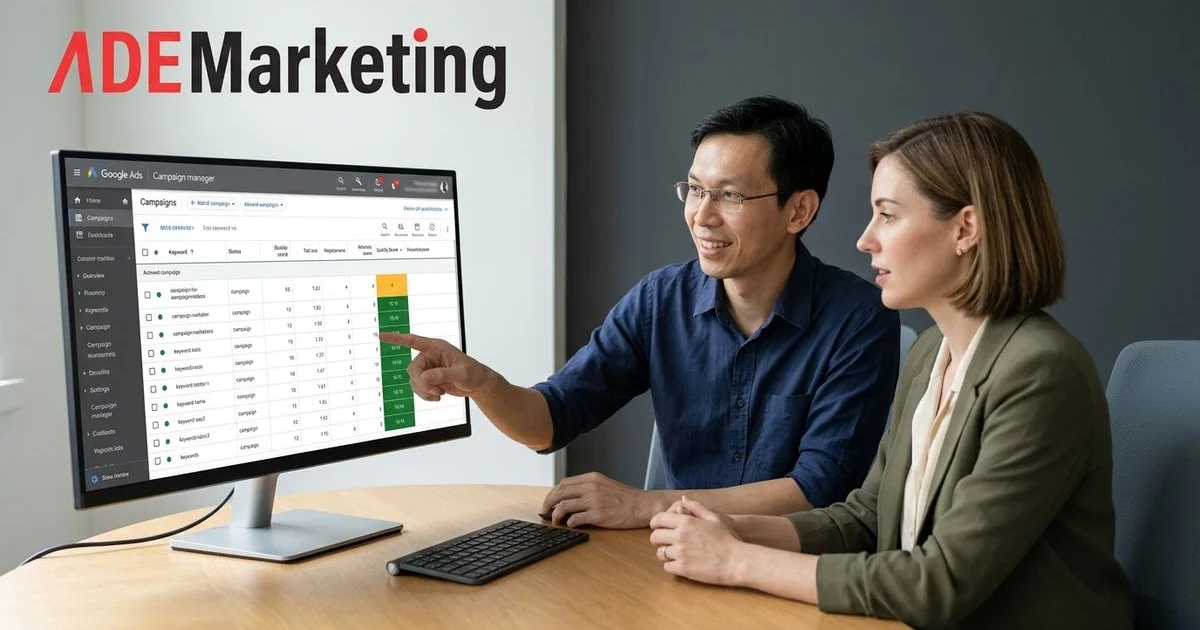
The google ads quality score is a 1 to 10 rating of how relevant your campaigns and landing pages are to the searcher’s intent. We rely on this metric because it directly impacts your cost per click and Ad Rank in every auction. Even with the rise of automated bidding in 2026, experts at Optmyzr confirm this rating remains the economic engine of the platform. Our At ADE Marketing team treats Quality Score as the most important optimisation target after conversion tracking integrity.
This score directly affects two critical elements:
- Your cost per click (CPC): A higher Quality Score means a lower CPC for the exact same ad position.
- Your Ad Rank: Quality Score multiplies your bid in the auction formula to determine your placement.
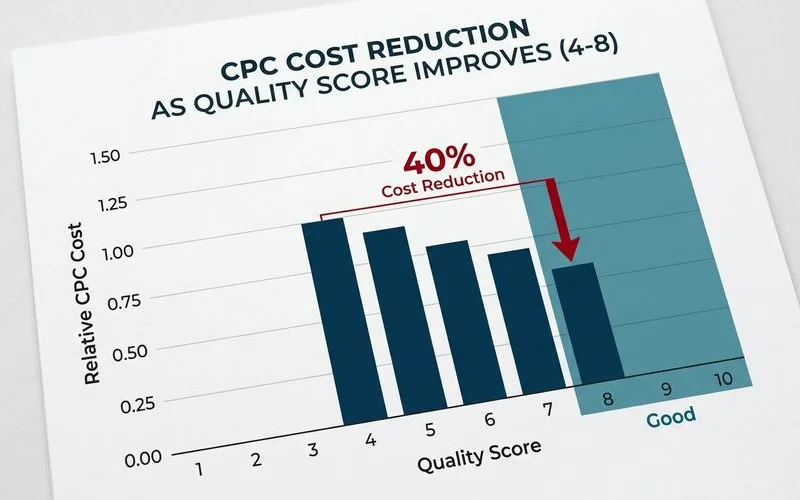
We know the practical effect is dramatic when looking at live Malaysian accounts. A keyword with a Quality Score of 4 might cost RM12 per click. Our specialists find the same keyword with a Quality Score of 8 might cost just RM6. Same auction, same ad position, half the cost. We watch these improvements compound into RM10K+ in saved spend per keyword theme over a year.
The three components
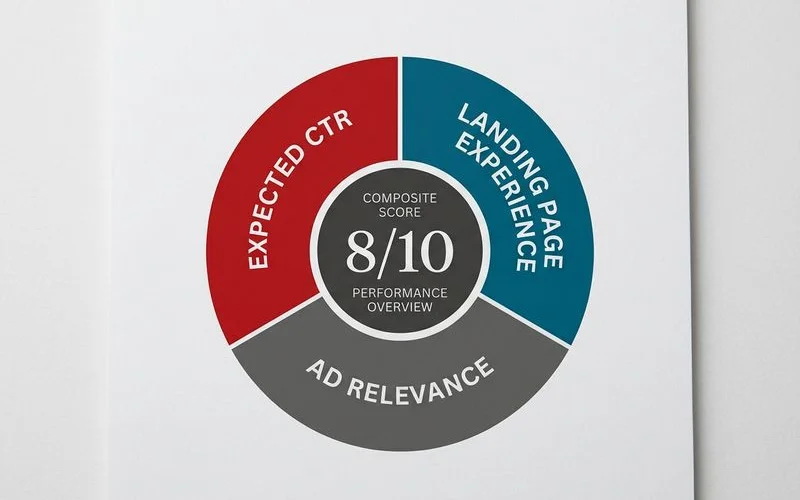
Google calculates Quality Score from three sub-components, rating each as Below Average, Average, or Above Average. We focus heavily on these three quality score factors to diagnose underperforming campaigns.
1. Expected CTR
Expected CTR measures how likely your ad is to be clicked when shown for a specific keyword. Our approach involves testing multiple ad variations to lift this specific metric above the industry median. This rating makes up roughly 39% of your total score weight. We improve this component by addressing several key factors:
- Ad copy relevance: Pinning the exact keyword to Headline 1 in Responsive Search Ads.
- Historical performance: Analyzing the past CTR of similar ads across your entire account.
- Ad extensions: Deploying sitelinks, callouts, structured snippets, and call features to maximize visibility.
2. Ad Relevance
Ad Relevance evaluates how closely your ad matches the user’s specific search intent. We isolate poor relevance by looking for generic ad copy applied to highly specific queries. A strong rating here proves your marketing message aligns perfectly with the chosen keyword. Our audits reveal this factor is often easiest to fix through structural account changes. Key variables affecting ad relevance include:
- Headline inclusion: Placing the primary keyword directly in your ad headline and descriptions.
- Intent matching: Aligning the promotional tone with the exact search query.
- Single Theme Ad Groups (STAGs): Splitting bloated ad groups so each contains only 5 to 10 tightly related keywords.
We consider this the fastest way to stop wasting ad spend on irrelevant clicks.
3. Landing Page Experience
Landing Page Experience measures how relevant, fast, and useful your website is for the person who clicked. We consider this the most underinvested area in Google Ads management today. Poor website performance directly increases your cost per click. Our developers use Google’s 2026 Core Web Vitals to measure this experience objectively. Crucial elements for a high landing page rating include:
- Message match: Echoing the keyword intent prominently in the H1 tag and first paragraph.
- Interaction to Next Paint (INP): Keeping interaction delays under 200 milliseconds, as 43% of sites still fail this metric.
- Largest Contentful Paint (LCP): Ensuring the largest visible element on your page loads in under 2.5 seconds.
- Trust signals: Displaying transparent contact information and a clear privacy policy.
We always test these metrics on mobile devices first.
How Quality Score affects your CPC
The Ad Rank formula clearly shows how this metric dictates your success. We explain it to clients using a very simple calculation.
Ad Rank ≈ Bid × Quality Score (plus ad extension impact and context)
A higher score essentially acts as a massive discount on your required bid. Our recent account reviews show that a score of 1 to 3 can cost up to 400% more per click than the baseline. If your competitor has a Quality Score of 6 and bids RM10, their Ad Rank is roughly 60. We calculate that with a Quality Score of 9, you only need to bid RM6.70 to outrank them.
That represents a 33% bid discount on the exact same auction. Our teams see this compounding discount mean the difference between a profitable campaign and a money pit. Across thousands of impressions per month, optimizing this metric is non-negotiable. We strongly recommend reviewing your scores before increasing any keyword bids.
How to diagnose a low Quality Score
Finding your exact scores is a straightforward process inside the platform. We recommend checking these columns weekly to catch performance drops early. In the Google Ads UI, simply follow these four steps:
- Go to the Keywords tab.
- Click the Columns dropdown and select Modify columns.
- Add the Qual. score, Exp. CTR, Ad relevance, and Landing page exp. columns.
- Click Apply.
The main number gives you the headline result for your keywords. Our strategists use the three sub-component ratings to determine exactly which lever to pull first.
| Sub-component reading | First fix |
|---|---|
| Expected CTR: Below Average | Rewrite ad copy to be more compelling and pin keywords to Headline 1 |
| Ad Relevance: Below Average | Tighten the ad group and ensure the keyword appears in the ad headline |
| Landing Page Experience: Below Average | Build a dedicated landing page for the keyword and fix mobile INP speeds |
This simple table guides all of our initial troubleshooting efforts. We find that addressing the lowest sub-component first is the best way to improve quality score.
The fastest Quality Score lifts
High-ROI optimization work requires a targeted, disciplined approach. We consistently rely on three specific strategies during our SEM engagements. These specific changes typically lift the metric by 1 to 3 points within 30 days. Our team expects a full 2 to 4 point increase within 60 days of implementation.
1. Ad Group Tightening
Splitting bloated ad groups is the most effective way to regain control. We structure each new group to contain only 5 to 10 closely related keywords. This ensures the corresponding ad copy is hyper-relevant to every single search query. Our accounts perform better because the messaging never feels generic to the user.
2. Ad Copy Alignment
Placing the primary keyword in the headline is a fundamental requirement. We audit every single ad variation to ensure this alignment exists. Google rewards ads that immediately confirm the user’s search intent. Our daily checks ensure no ad runs without this critical matching element.
3. Landing Page Intent Matching
Building or refining landing pages is essential for post-click success. We ensure the H1 tag and the first paragraph directly echo the keyword intent. Removing friction between the ad promise and the website reality lowers bounce rates. Our developers also strip out heavy code to hit that critical 2.5-second LCP speed target.
Why Quality Score work has compounding returns
This optimization process is a continuous cycle, not a one-time fix. We see scores climb steadily over months when applying these disciplines consistently. Every single point gained reduces your CPC and improves your Ad Rank.
Our data shows this compounding effect protects your account from three specific risks:
- CPC inflation: Shielding your budget from average cost increases in competitive auctions.
- Competitor bidding: Forcing rivals to pay significantly more just to match your ad position.
- Budget stagnation: Preventing the exact same spend from producing 30% to 50% fewer leads.
This reality is exactly why “set and forget” Google Ads management costs Malaysian SMEs so much money. We watch scores drift down and CPCs creep up when accounts face neglect. The solution requires proactive, monthly adjustments to your targeting and ad copy.
We cover the broader account audit framework in how to audit your Google Ads account. Common issues that suppress performance are outlined in our guide to common Google Ads mistakes. Our experts are ready to improve your google ads quality score when you Talk to ADE Marketing.